
Powered by Ziptron technology, the electric SUV for the personal segment comes with a range of 312 km on a single charge and a high voltage system, fast charging capability, extended battery life and class leading safety features. Besides, it has 35 connected car features as well. The Nexon EV will be available in three trim levels across 60 authorised dealerships in 22 cities, the company said at the launch.

The smartest homes are not the ones that dazzle with tech, but the ones that disappear into your daily life while quietly elevating it.
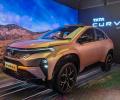
Tata Motors is looking to consolidate its position in the SUV segment as it marks its entry into the highly competitive mid-size space which is currently dominated by South Korean and Japanese carmakers. The Mumbai-based auto major on Monday launched midsize SUV coupe Curvv with petrol and diesel powertrains with a price starting at Rs 9.99 lakh. The company has already unveiled the electric version of the model in August.
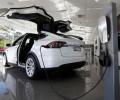
Sales of total electric vehicles in India are expected to be around 10 lakh units this year, equal to what was sold collectively in the last 15 years, mainly riding on the good traction witnessed by electric two-wheelers, Society of Manufacturers of Electric Vehicles (SMEV) said on Thursday. In 2021, the sales of electric two-wheelers (E2Ws) in the country jumped over two-fold at 233,971 units driven by a good traction of high-speed scooters as compared to 100,736 units in 2020, SMEV said in a statement. "We haven't seen better days than the last few months in the entire EV journey.

The aim is to replace nearly 40 per cent of its existing last mile fleet of delivery vans with EVs by March 2020. o start with, the company is looking at deploying nearly 160 e-vans by the end of 2019.
Tata Motors group's investment for this fiscal is pegged at Rs 28,900 crore, mostly for its British arm Jaguar Land Rover (JLR), company chairman N Chandrasekaran said on Friday. The company will also look to raise capital separately for its electric vehicles (EV) business at an appropriate time. It is looking to have 25 per cent of its sales coming from EVs in the medium to long term, up from 2 per cent at present, he said while addressing the company's virtual AGM.
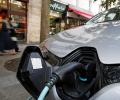
Automobile manufacturers, new and old, as well as ancillary suppliers are set to spend a combined Rs 70,630 crore over the next five years on either entering the electric vehicle segment or stepping up their presence in it. Data culled from announcements made by firms shows India, the world's fifth largest automobile market, is poised to receive one of the biggest capex pushes ever to fuel the transition from internal combustion engines to electric motors and batteries as part of a green drive. The EV push, egged on by the government's emphasis on electric mobility to meet its net zero targets, is expected to yield at least 25 electric vehicles - new ones as well as electrified versions of existing vehicles running on internal combustion engines.

'One can charge it at home, in the office, on the go. All it needs is a 15 Amp electric socket which is found is all our homes.'

The MG ZS EV, to be unveiled next month, will go head to head with Hyundai Kona, launched in July this year as the country's first fully electric SUV.

Priced at Rs 7.99 lakh for the entry-level product, M&M has launched the diesel and CNG variants of Veero, and an electric version will come in the future.

The company, which already has around 66 per cent market share in the hatchback segment and about 50 per cent in the overall domestic passenger vehicle segment, currently sells Vitara Brezza and S-Cross in the SUV segment. In an interaction with PTI, MSI managing director and CEO Kenichi Ayukawa acknowledged that there was some lag in launching new products due to the pandemic but the company is now on track regarding new model launches.

Hopes to launch full-size SUV MG Gloster by Diwali 2020, and have four products in the market in one-and-a-half years of its operations in India.

Royal Enfield is planning to introduce its electric bike initially in developed markets such as Europe and the US where it anticipates better traction for the premium product, a top company executive said on Tuesday. Royal Enfield, a division of Eicher Motors, forayed into electric bike space on Monday with the unveiling of its first model under the all-new Flying Flea brand.

Tata Elxsi (TelX) reported a weak Q3FY25, with a sharp deceleration in the transportation vertical. However, recent deals in the Asia-Pacific (APAC), higher mix of original equipment makers (OEMs) and partnership with Qualcomm will improve growth. FY25 is the third successive financial year of revenue growth deceleration and second successive financial year of profit deceleration.
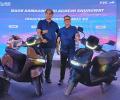
TVS Motor Company has relaunched its popular electric scooter, the TVS iQube, in Maharashtra with new variants and colours.

The first luxury car will be launched in the first quarter of 2025 and the company is planning to open 12 'MG Select' showrooms in the next six months.

Bajaj Auto is gearing up to launch clean-energy vehicles including another motorcycle powered by compressed natural gas (CNG), showcase ethanol-powered motorcycles and three-wheelers next month, as well as launch a new Chetak platform early next year, as it closes in on hitting 100,000 monthly sales from clean-energy vehicles this festival season. In an interview with CNBC-TV18, Bajaj Auto managing director Rajiv Bajaj said these initiatives were part of the firm's broader goal to achieve monthly sales of 100,000 clean-energy vehicles this festival season.

koda Auto India is set to drive in a new car by the first half of next year to reach its target of 100,000 unit annual sales in the country by 2026. The compact sports utility vehicle (SUV) will be positioned against the likes of Maruti Brezza, Hyundai Venue, and Kia Sonet, and would be competitively priced, a senior company official said. koda will also export the car to right-hand-drive markets like Australia, New Zealand and the Asean nations.
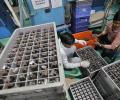
The new four-wheeler (4W) electric vehicle (EV) policy may spur the entry of global majors. The manufacturing policy cuts Customs duty to 15 per cent, given a minimum investment commitment. It calls for a minimum investment of Rs 4,150 crore (about $500 million) for making electric four wheelers (e-4Ws), with manufacturing to commence within three years of approval.

Posco Daewoo, the South Korean conglomerate whose Cielo sedan and Matiz hatchback were once the pride of Indian car owners, is looking to re-enter India. And its return journey is riding on plans to sell electric bikes and e-cycles. The company termed India's robust economic growth and surging consumer demand as reasons behind its comeback plans, saying they make India "one of the world's most promising consumer markets," according to Y S Choi, general manager, Posco Daewoo South Korea.

Metropolis Healthcare (MHL) has decided to acquire a 100 per cent stake in Gurgaon-based Core Diagnostics for Rs 247 crore. This is about 2.2x FY24 (financial year 2023-24) enterprise value (EV)/sales and estimated 14x FY26 EV/Ebitda for the deal.

Even as India overtakes Japan in automotive sales in 2022, moving to third place for the first time, oddly enough the country's biggest motor show is going to see some big hitters give it a clear miss. Some prominent automotive brands have cited high event costs, negligible returns on investment, poor event management, and unfavourable location as reasons for their reluctance to participate. Major pure-play electric two-wheelers, too, are riding past this year's edition of the Auto Expo.
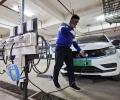
Even as the government debates whether to continue the FAME-II subsidy for electric vehicles (EVs), the share of such vehicles in overall sales is decelerating, after witnessing a heady growth in the first few years. The penetration of EVs - electric two-wheelers, passenger vehicles, three- wheelers and other segments collectively - in the first 10 months of FY24 has been pegged at 4.3 per cent, compared to 3.7 per cent in FY23, according to credit rating agency ICRA.

Leading two-wheeler maker Hero MotoCorp is going full throttle to launch a Harley-Davidson model with retro styling as it looks to enter a very profitable segment in the premium motorcycle space, according to a senior company official. The alliance between Hero and Harley-Davidson fructified last year after the iconic US two-wheeler maker announced discontinuation of sales and manufacturing operations in India, a decade after it started selling its premium bikes in the country. "There are two legs to the Harley tie up strategy. One of course is that we are the sales distributors for Harley bikes in India.

Indian passenger vehicles market registered record wholesales of 43 lakh units in 2024, with companies like market leader Maruti Suzuki, Hyundai, Tata Motors, Toyota Kirloskar Motor, and Kia posting their best-ever annual domestic sales. The continued growth of SUVs, along with rural markets playing a key role in driving up car sales, helped the industry better the previous best of nearly 41.1 lakh units posted in 2023.

Car sales are experiencing a challenging phase with around Rs 60,000 crore worth of inventory lying unsold with dealers.

Automotive (auto) major Mahindra & Mahindra (M&M), which is readying to launch nine sport utility vehicles (internal combustion engine/ICE), seven Born Electric Vehicles (BEVs), and seven light commercial vehicles by 2030, has outlined an investment of Rs 27,000 crore in its auto business between 2024-25 (FY25) and 2026-27 (FY27). Over the next three years, the company will deploy Rs 37,000 crore, including its auto business, farm business (Rs 5,000 crore), and service business (Rs 5,000 crore).

The stock of the country's largest passenger vehicle maker, Maruti Suzuki India (MSIL), has been hitting successive all-time highs over the past three trading sessions. The rally in the scrip has helped it notch over a 21 per cent gain since the start of February, outperforming the National Stock Exchange Nifty Auto Index. The gains for the leader of small passenger cars have been more recent, as the company still trails the Nifty Auto over one- and two-year periods.
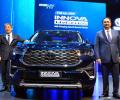
Hybrids have helped Maruti acquire leadership in SUVs, a segment that was never its forte. Toyota has also risen with the hybrid tide to clock its highest-ever annual sales in 2023.

Kinetic Engineering (KEL), the makers of the iconic Luna two-wheelers in the seventies, will soon start producing components for an electric version of the moped. Pune-based Kinetic said in September that Luna would make a comeback in an electric avatar. The electric Luna, or E-Luna, will be launched by KEL's sister company Kinetic Green Energy and Power Solutions.
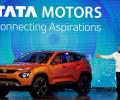
Notwithstanding robust volume growth and a strong performance from Jaguar Land Rover (JLR), Tata Motors, the country's second-largest automobile (auto) manufacturer by market capitalisation, disappointed the Street with its January-March quarter (Q4) results for 2023-24 (FY24). While consolidated revenues saw a 13 per cent increase, lower-than-expected realisations in the Indian operations weighed down overall performance.

India's second-largest passenger vehicles firm will be valued at Rs 1.59 trillion at the top-end of the price band of Rs 1,865-Rs 1,960.

The electric vehicle evolution in India's passenger vehicle market has remained frozen in time and may see limited adoption over the next decade, experts say.

Volkswagen Passenger Cars is targeting a volume sales growth of about 15 per cent in the country in 2024, even as it expects the Indian passenger vehicle (PV) industry to grow by 5-7 per cent in the current year, its India brand director, Ashish Gupta, said on Thursday. This means the company is expecting to grow 2-3 times faster than the Indian PV industry in 2024. But globally, the German automaker is expecting just 3 per cent rise in sales this year, down from 12 per cent last year.

The company, which is part of French auto giant Renault Group, showcased on Wednesday three electric vehicle models and announced plans for a concept car at the ongoing Tokyo Motor Show.

Automobile (auto) retail sales in India grew by an impressive 14 per cent in July compared to the same period last year, driven by a surge in the rural economy, good product availability, and product launches. While passenger vehicles (PVs) saw a 10 per cent increase during this period, inventory levels have surged to a historic high of 67-72 days in PVs, equating to Rs 73,000 crore worth of stock, according to the Federation of Automobile Dealers Associations (Fada). This poses a risk to dealer sustainability. Inventory levels in July 2023 were only 50-55 days, equating to a stock worth Rs 49,833 crore. In June 2024, inventory was between 62 and 67 days, with a stock value of Rs 60,000 crore.

Under regulatory scanner, Bengaluru-based Ola Electric has witnessed an uptick in its sales after facing a decline during the last few months. The company's daily average sales rose to 1,154 units in October, according to Vahan data from the Ministry of Road Transport and Highways (MoRTH). With sales reaching 17,315 units between October 1 and October 15, the company has also boosted its market share to 34 per cent, up from 27 per cent in September, in the electric two-wheeler (e2W) segment.

Speaking at the forum, Suzuki Motor Corporation (SMC) representative director and president Toshihiro Suzuki said, "Suzuki's future mission is to achieve carbon neutrality with small cars. "We will continue active investment in India to realise Self-reliant India (Atma-nirbhar Bharat)." Under the MoU, the company's wholly-owned arm Suzuki Motor Gujarat Pvt Ltd (SMG) will invest Rs 7,300 crore for the construction of a plant for BEV batteries at a land neighboring to SMG's existing plant by 2026.
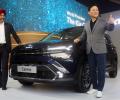
'India is the sixth-largest market for the Kia Corporation, and contributes 8 to 9 per cent to our global sales.' 'We are eyeing 10 per cent market share over the next few years depending on customer demand and new product innovations.'

Ola Electric share price strategy: The meteoric rise of Ola Electric share price has left analysts and investors bewildered. Yet, they suggest investors hold on to the stock as it remains a pure "momentum" play. Since its listing on August 9, the stock has surged 92 per cent (till August 19) over its issue price of Rs 76, taking its market capitalisation to a little over Rs 63,000 crore.
